Answer in 30 seconds
As customers delegate more discovery, comparison and purchasing to AI agents, brands need to become legible to machines as well as persuasive to people. That means structured offers, explicit eligibility, reliable product and loyalty data, clear permissions and customer state that authorised agents can interpret and act on.
For most of CRM’s history, the audience has been obvious.
The customer.
We build segments around them. We personalise messages for them. We optimise journeys around their behaviour. We try to understand what they need, what they are likely to do next, and what might move them to act.
That model is starting to change.
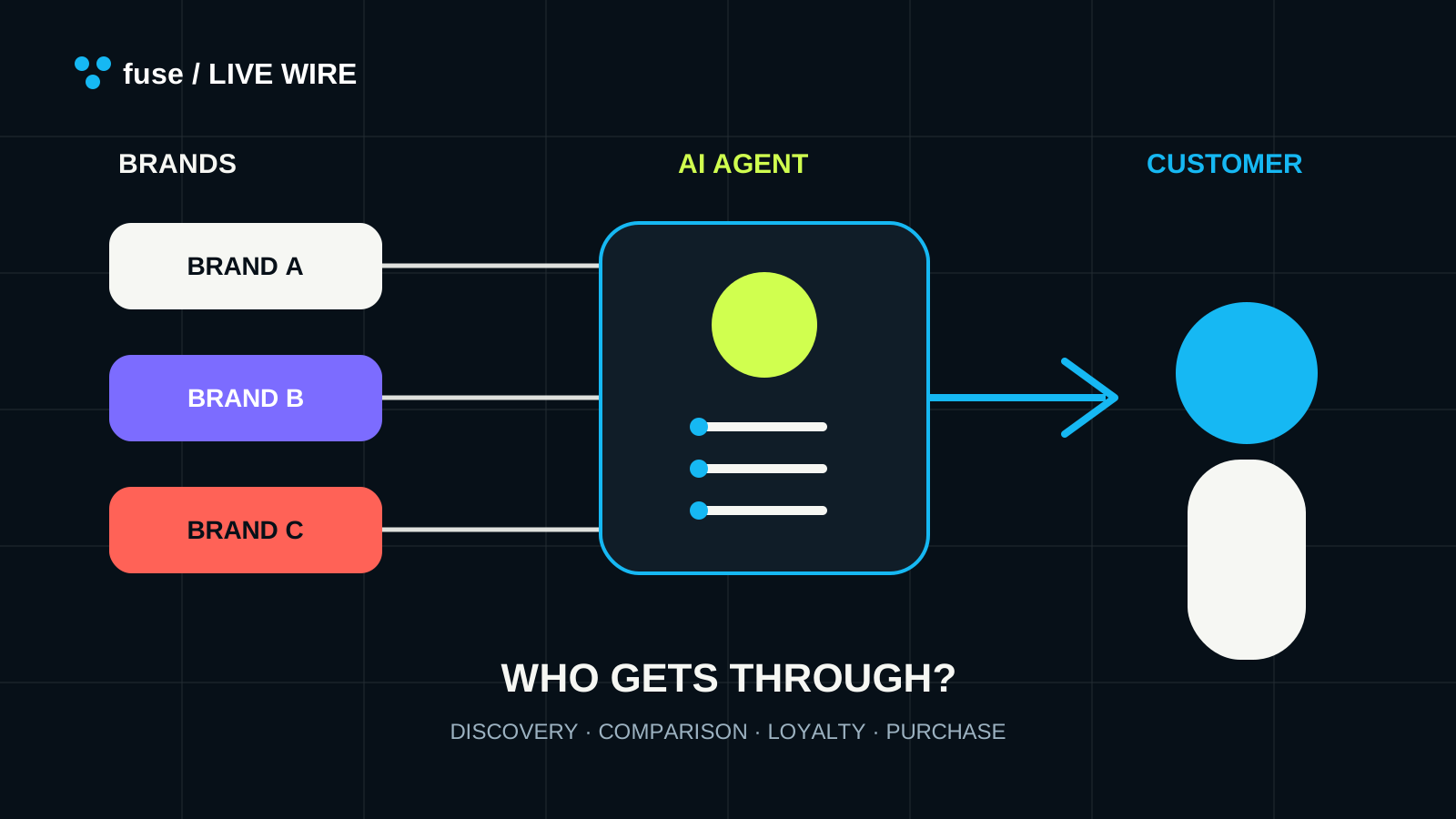
Customers are increasingly using AI agents to search, compare, plan and buy on their behalf. The customer remains the decision owner. The agent is becoming part of the decision process.
That means CRM may soon need to serve two audiences: the human customer and the software acting for them.
The agent is becoming part of the journey
Agentic commerce is moving quickly from concept to operating model.
McKinsey describes a progression from supervised shopping assistance through to agents that can act against standing goals, such as maintaining loyalty status or keeping household spend within a budget. At higher levels of delegation, the shopper becomes more episodic while the agent handles comparison, eligibility, purchase and follow-through.
Payments infrastructure is moving in the same direction. Mastercard and Visa are developing ways for AI agents to transact within defined permissions, limits and merchant restrictions.
Commerce platforms are adapting too. Salesforce now supports agentic commerce experiences that connect shoppers, merchants and AI apps, including integrations with ChatGPT.
The practical implication is simple: the traditional customer journey assumes the brand communicates directly with the person. That assumption is weakening.
CRM has always optimised for human interpretation
Most CRM programmes are designed around human attention.
A customer sees an offer. They understand the benefit. They respond to urgency, convenience, relevance, emotion or brand preference. They decide whether to act.
An AI agent works differently.
It may interpret the same offer as structured information: Is the customer eligible? What is the total cost? Is there a loyalty benefit? Does this beat another merchant? Is the product available? Can it arrive within the requested window? Is there a restriction or expiry date? Does this help achieve the customer’s stated goal?
The creative message still matters to the human. The structure underneath it increasingly matters to the agent.
Machine legibility becomes part of customer experience
This creates a new requirement for CRM teams: machine legibility.
Offers need to be understandable. Benefits need to be explicit. Eligibility needs to be accessible. Product information needs to be reliable. Loyalty rules need to be interpretable. Availability and pricing need to be current. Customer permissions need to be clear.
An agent cannot reason well over a proposition if the value exists only in marketing copy or if critical rules are buried across disconnected systems.
McKinsey makes the point bluntly: if catalogues, policies and value propositions are not machine-readable, agents may simply fail to surface the brand to shoppers.
Loyalty becomes particularly interesting
Imagine a customer tells their agent: Keep my airline status this year at the lowest reasonable cost.
Or: Buy my usual household products, but prioritise retailers where I have useful loyalty benefits.
Or: Find me a weekend break. Use any points, vouchers or member benefits I already have.
The loyalty programme now has two jobs.
It still needs to create belonging and emotional value for the person.
It also needs to make that value sufficiently structured for an agent to understand.
The agent needs to know current status, available benefits, points or currency balance, expiry, eligibility, partner benefits, redemption rules, progress towards the next tier and whether a particular purchase improves the customer’s position.
A programme can be emotionally powerful and technically invisible. That becomes a problem when software is helping make the decision.
The next-best-action may have a new recipient
CRM teams already invest heavily in next-best-action logic. Who should receive the offer? Which channel? Which product? Which incentive? When?
Agentic behaviour introduces another possibility: some decisions may be consumed by another decision-making system before the customer sees them.
A brand may expose an offer, benefit or recommendation that the customer’s agent evaluates against several alternatives. The customer may never see the messages that lose.
McKinsey’s European research suggests this is already emerging upstream. AI use is strongest in discovery, comparison and recommendation, while full autonomous execution remains less common. By the time a customer arrives at a retailer, much of the evaluation may already have happened elsewhere.
This changes what optimisation means.
A subject line can increase open rate. A beautifully designed email can improve engagement. Neither helps if the agent made the choice upstream and the customer never entered that part of the journey.
Brand still matters
People will still care about taste, identity, trust, aspiration, belonging and experience. Customers will not delegate every choice, and willingness to delegate varies sharply by category, risk and emotional significance.
The challenge is that brands may need to become effective in both modes.
Emotionally distinctive to humans. Structurally clear to agents.
CRM architecture starts to matter more
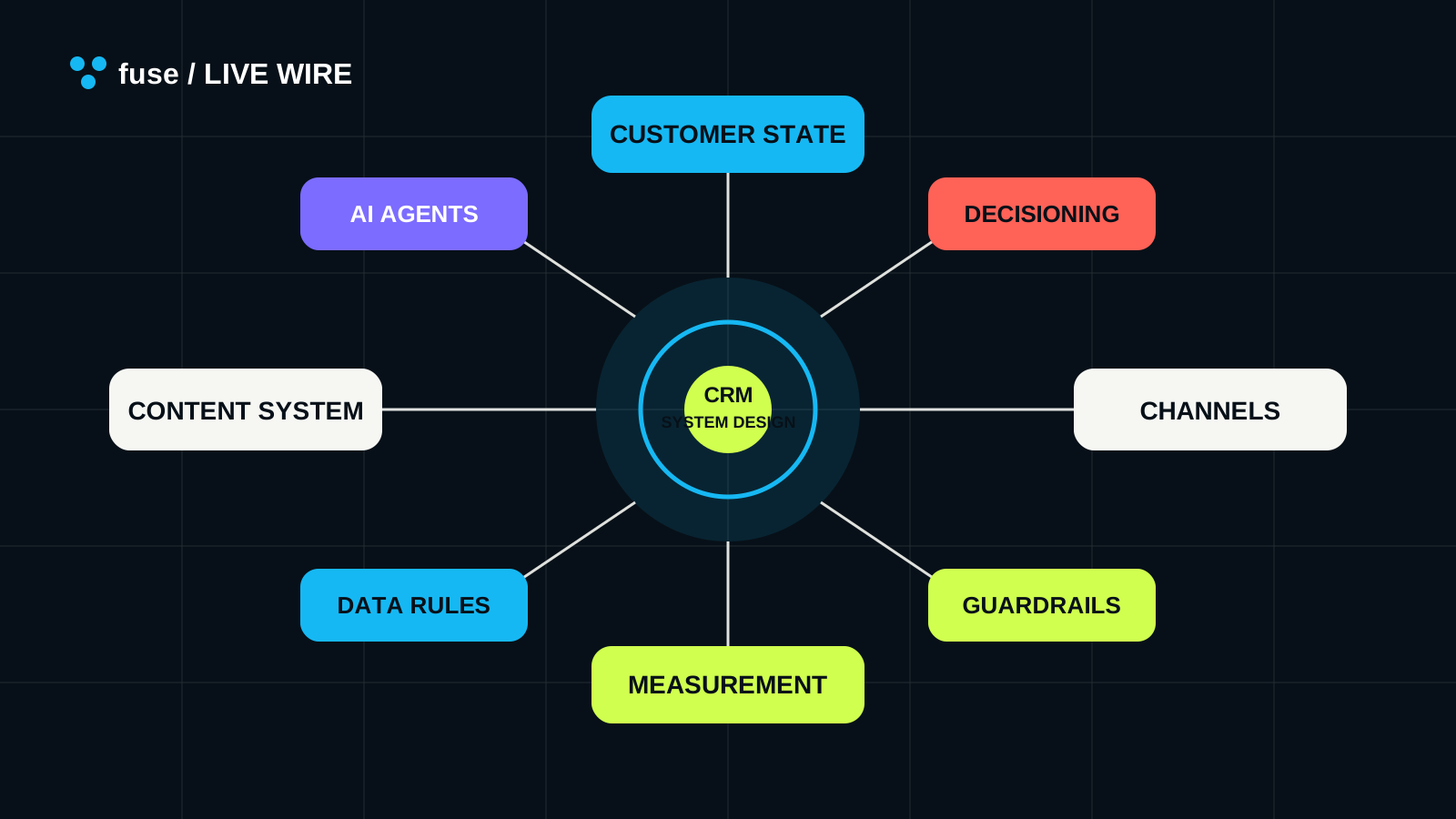
If an agent asks: What benefits does this customer have available right now? Which system answers?
If the customer qualifies for an offer, where does that eligibility live? If a benefit changes after a purchase, how quickly is the state updated? Can another authorised system retrieve it? Can the customer see what their agent was allowed to access? Can the agent act, or only advise?
These are CRM questions. They are also data, identity, consent, commerce and architecture questions. The boundaries begin to blur.
CRM teams should start preparing now
This does not require launching an autonomous-agent programme next week. It does mean reviewing whether your customer proposition is understandable beyond the interfaces you currently control.
1. Make customer value explicit. Document benefits, rules, conditions and eligibility logic that currently depend on a human reading a campaign or web page.
2. Improve structured customer state. Know where loyalty status, preferences, permissions, balances, entitlements and important lifecycle state actually live.
3. Treat product and offer data as customer-facing infrastructure. Accurate structured data becomes part of marketing performance when agents are performing discovery and comparison.
4. Design permission boundaries. Decide what an authorised customer agent should be able to read, recommend and execute.
5. Measure journeys you may not fully own. Brands will increasingly need to understand discovery and decision activity that begins outside their own websites and apps.
A new definition of CRM
CRM has spent decades trying to build a better understanding of the customer. That remains the job.
The interface around that customer is changing.
Sometimes the person will engage directly. Sometimes an AI will help them evaluate. Sometimes an AI may act within rules the customer has already set.
The brands that prepare for this will design for both. They will create propositions people want to belong to and systems that software can understand.
Because your customer’s AI may soon help decide whether your brand matters.