
Answer in 30 seconds
Peak readiness means your team can use current customer and commerce data, control contact pressure, adapt triggers, publish reliable creative and manage the journey after purchase. The Fuse Peak Planning Playbook covers six areas to review. Its eight-question calculator produces a score out of 100 to help start a planning discussion.
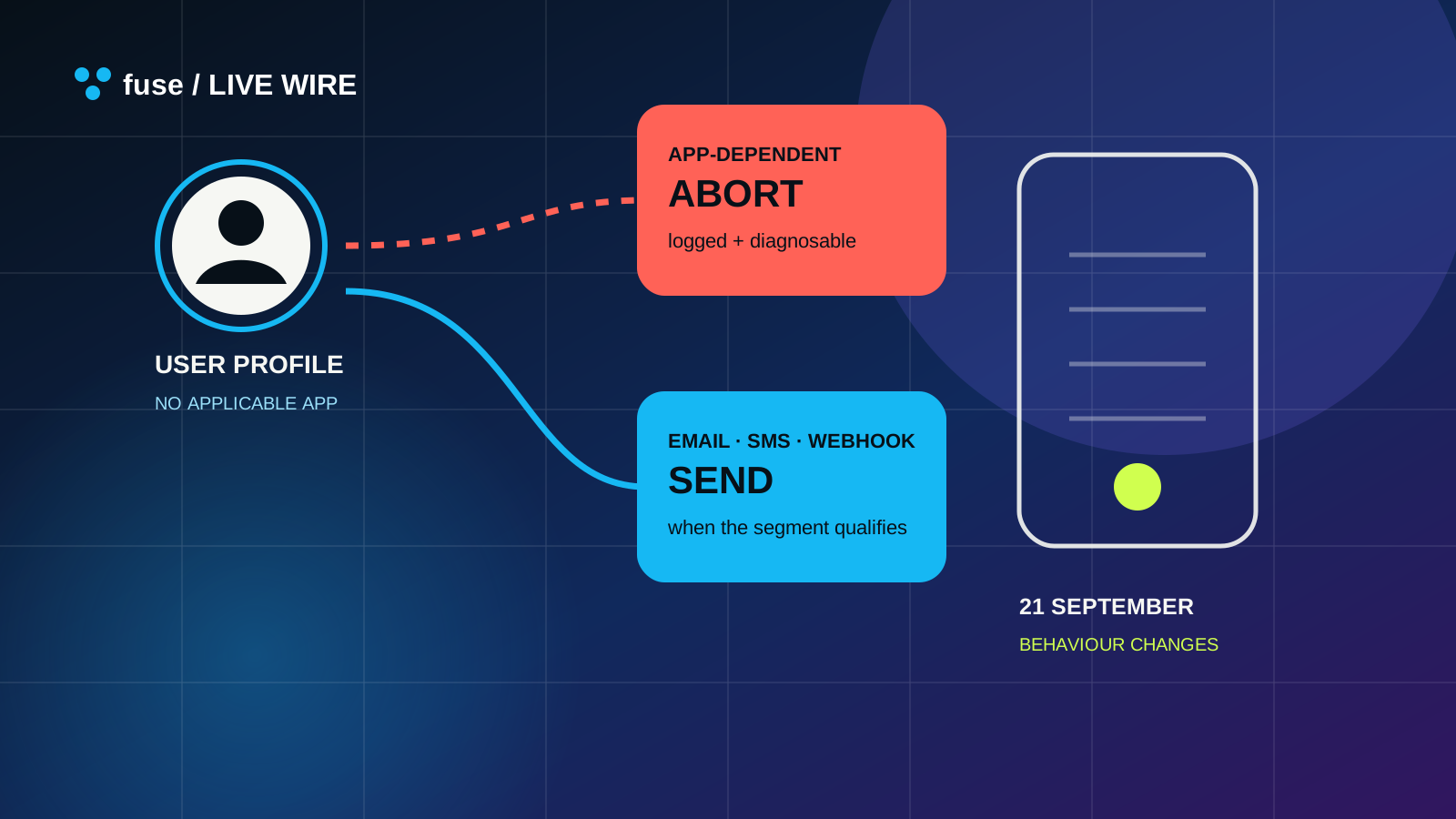
Picture a customer who places an order while an abandoned-cart reminder is waiting to send. The purchase event arrives late. The reminder goes out. Meanwhile, a product in the next scheduled promotion sells out. Each message may have passed its content checks. The customer still receives an experience that makes little sense.
This is the kind of situation peak planning needs to cover. Increased demand puts pressure on the connections between customer data, marketing, stock, fulfilment and service. Teams need clear rules for how those signals change the next customer message.
The Fuse Peak Planning Playbook gives CRM and customer engagement teams a practical framework for that work. Start with these six checks.
1. Can your journeys see current customer state?
Choose a live journey and follow the events it needs. Test what happens when a customer buys, stock changes, a return starts or a service case opens. Record how long each event takes to reach the engagement platform. Confirm that it can change or stop the message before sending.
2. Is contact pressure under control?
Check sender authentication, unsubscribe handling and reputation. Define engagement groups, suppression rules and channel frequency limits. Give transactional messages a clear role. Agree who can reduce promotional activity when customer response or delivery performance gives cause for concern.
3. Do triggers reflect purchase intent?
Review cart, browse, price-drop and back-in-stock journeys. Test timing against your category and customer behaviour. Confirm that a completed purchase exits the relevant recovery journey. Check how stock, value and recent contact affect the decision to send.
4. Can creative handle exceptions?
Test modular templates on mobile. Check missing product images, expired offers, empty recommendations and localisation. Build useful fallbacks and assign owners for changes. A team should be able to update an offer without rebuilding every channel execution.
5. Does each channel have a defined job?
Map email, push, SMS and in-product messages across one customer journey. Set the purpose of each contact and the conditions for moving to another channel. In Braze, this review can cover Canvas branches, exits, suppression logic and frequency controls. Test a purchase, a stock issue and a service issue through the journey.
6. Is the journey after purchase ready?
Review order updates, delivery questions, returns and exchanges. Plan how a new buyer reaches a useful second purchase. Agree how service and fulfilment events affect promotional contact. Name an owner for each hand-off between teams.
Turn the gaps into a rehearsal plan
For each gap, record an owner, a next action and evidence that the fix works. Rehearse failure scenarios with the people who can change data, journeys, creative and operations. Agree what the team will stop when conditions change.
Use the readiness score to start the discussion
The Fuse Peak Readiness Calculator asks eight yes-or-no questions about data, suppression, deliverability, audiences, creative, triggers, channels and post-purchase journeys. It converts the number of checked answers into a score out of 100. Answer with what works today and use the remaining gaps as your meeting agenda.
The score is a self-assessment. It does not certify readiness or predict revenue. A high score still needs evidence from testing. The playbook also includes planning phases and control-room scenarios to help your team turn the assessment into action.
Free Fuse resource
Build your peak readiness plan
Read the Peak Planning Playbook, then use the two-minute calculator to identify gaps and agree your team’s next actions.