Answer in 30 seconds
As AI takes on more campaign production, the high-value CRM work moves upstream. Teams need people who can define objectives, customer state, data inputs, guardrails, reusable components, decision logic, approval boundaries and measurement. The CRM manager increasingly becomes the designer and governor of the engagement system.
For years, the CRM manager’s craft has been closely tied to campaign production. Build the audience. Write the brief. Configure the journey. Create the variants. QA the logic. Schedule the send. Read the results. Repeat.
That operating model is changing quickly.
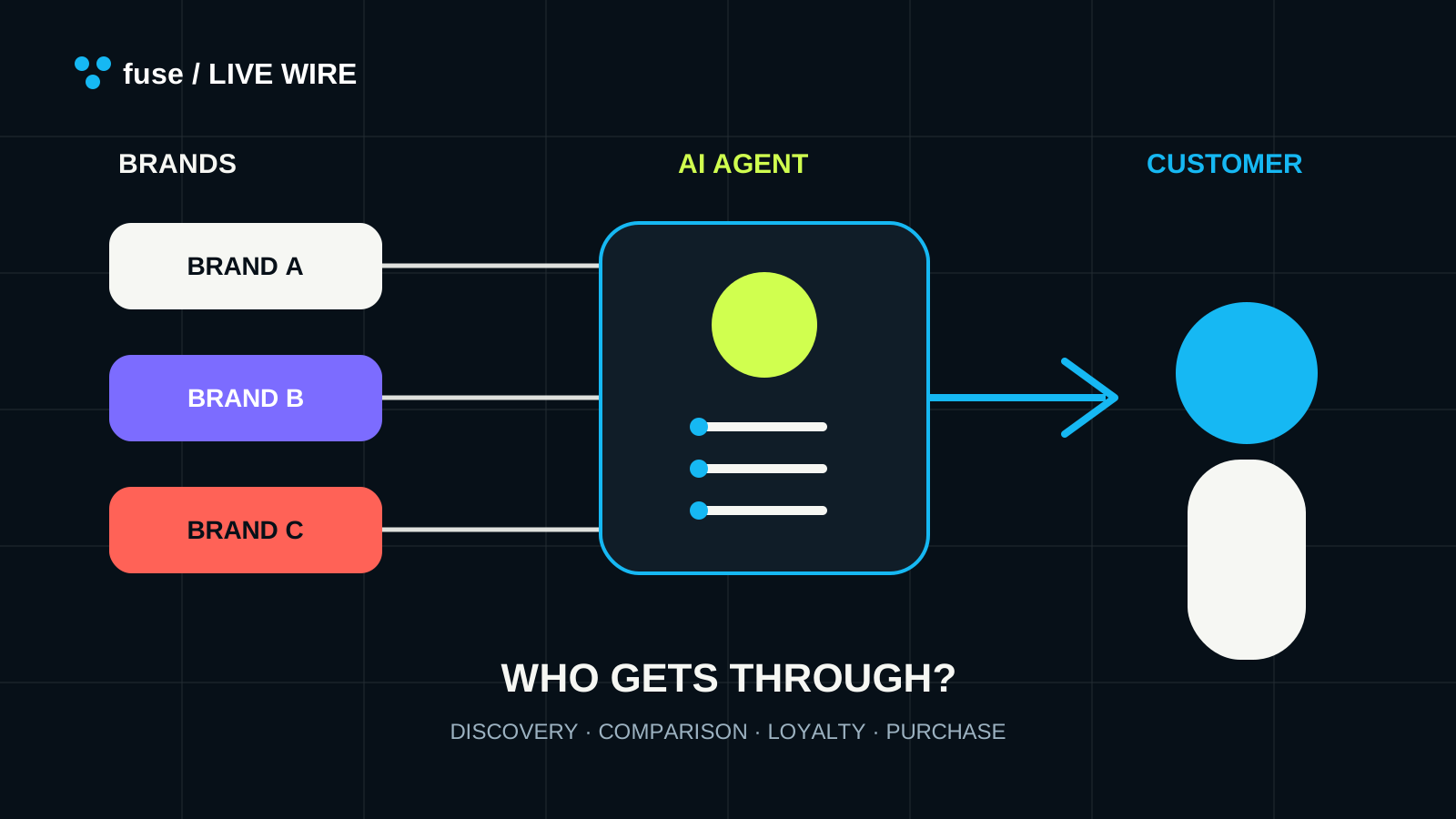
Braze is moving AI into campaign creation, agent workflows and decisioning. Its current direction includes Operator, Agent Console and Decisioning Studio. At Forge 2026, Braze is also running sessions where marketers build agents for Canvas, Catalogs and campaign standards.
Execution is moving into the system
When software can generate copy, create variants, configure journeys, query data and optimise decisions, manually assembling campaigns becomes a smaller part of the job.
The CRM team still has to decide what the system should do, what information it can use, where it must stop and how success is measured.
That is systems design.
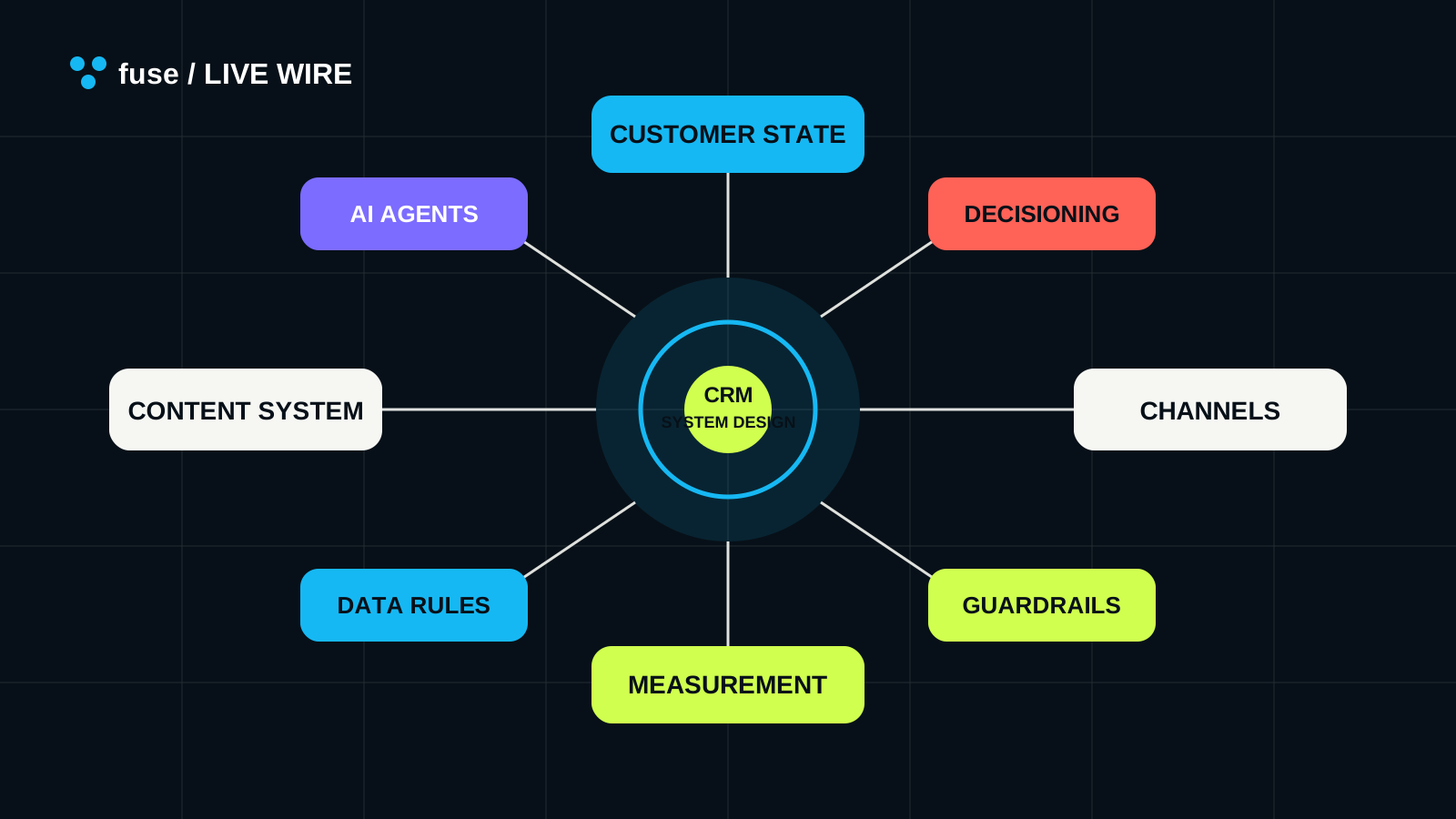
The CRM manager increasingly needs to understand the whole engagement machine: customer state, event quality, audience logic, decision rules, content components, channel constraints, agent instructions, approval boundaries and measurement.
The brief becomes a specification
A campaign brief explains what a team should make. A system specification explains what a platform or agent is allowed to produce repeatedly.
It defines the objective. It identifies the eligible audience. It specifies the customer signals that matter. It sets commercial and brand constraints. It defines acceptable content. It states what requires human approval. It explains what the system should learn from the result.
That requires enough precision for a machine to act safely and enough flexibility for the system to improve.
The campaign becomes a set of components
AI decisioning becomes more useful when it has meaningful choices.
At Forge 2026, Braze plans to show a lifecycle campaign where Decisioning Studio evaluated 53,475 combinations across 60,000 contacts. Braze reports a 272% lift in click rate and a 235% lift in registration rate in that example.
The operating model behind those numbers matters. A system can explore thousands of combinations only when marketers provide structured choices: messages, offers, treatments, timings, channels and rules that can be safely recombined.
That puts pressure on CRM teams to create reusable content and decision components instead of isolated campaigns.
Measurement has to become part of the design
A system cannot improve if the feedback signal is weak.
Open rate, click rate and conversion still matter. Teams also need clear business outcomes, reliable event instrumentation, control groups, eligibility rules and a way to distinguish short-term response from long-term customer value.
Measurement therefore moves upstream. It becomes part of the system specification before the campaign runs.
CRM teams will need a new operating model
The strongest CRM teams will need people who can move comfortably across marketing, data, creative, product and technology.
They will need to answer practical questions. Which system owns customer state? Which attributes are reliable enough for decisioning? Which components can an agent change? Which messages need approval? How do brand rules become machine-readable? What happens when the agent has low confidence? Who owns the outcome when automation makes a poor decision?
These questions define the environment in which execution happens.
What should CRM leaders do now?
Start by identifying the repeatable decisions inside the CRM operation. Document the rules that experienced operators carry in their heads. Standardise the content and journey components that recur. Improve the quality of the customer signals that drive decisions. Define clear approval and escalation boundaries. Build measurement into the workflow.
Then automate carefully.
The objective is a customer engagement system that can make more good decisions, learn faster and remain accountable to the people who designed it.
That is why the CRM manager is becoming a systems designer.